

Blast From the Past – Keeping the ’Boats Afloat
Introduction by Chris Murray
My father, David Murray (who was the Traffic Officer for the Lord Howe flying boat operation from 1958 to 1974), always spoke highly of the engineers who maintained the aircraft. Major maintenance was regularly performed in the Rose Bay hanger and, in addition, a “flight engineer” always travelled with the flying boats to Lord Howe.
Dad’s confidence in the engineers was justified: in 27 years of Lord Howe operation, the flying boats always delivered passengers safely to their destination. This was a tribute, not just to the skill of the pilots, but to the quiet professionalism of the engineers who kept these aircraft safely in the air and on the water.
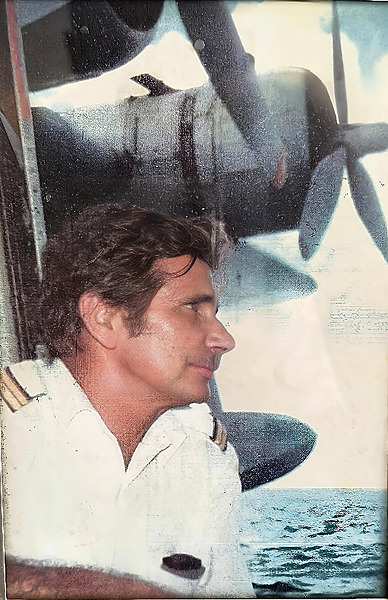
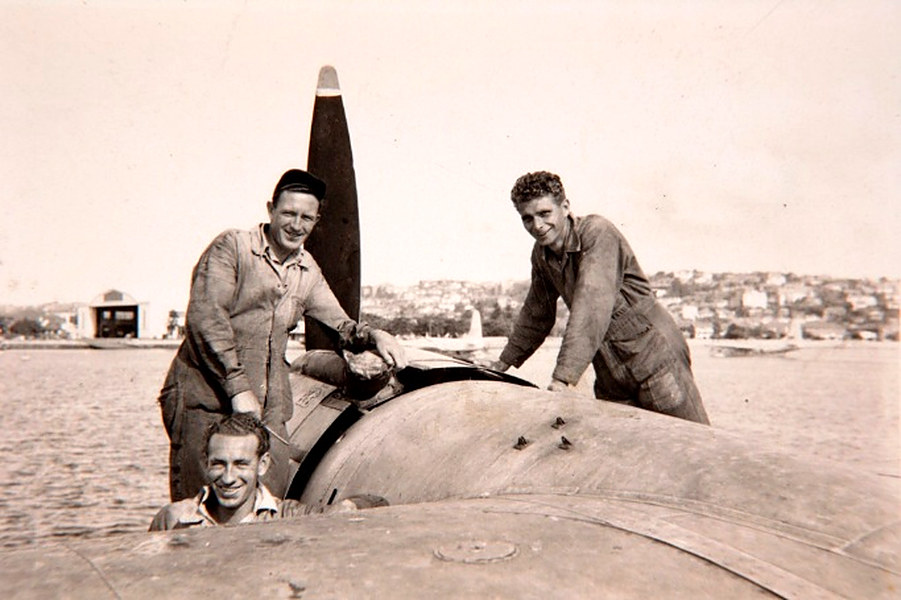
Although I was only a primary school-aged student on Lord Howe in the early 1960s, I was savvy enough to observe aircraft maintenance issues from time to time. We’d often see the flight engineer emerge from the perspex blister, or hatch, located towards the rear of the cockpit, to inspect the aircraft whist it was moored at Lord Howe. Once, when repairs were being undertaken, an engineer’s tool was accidentally dropped into the lagoon. An “SOS” went out to local scuba diver, Julie Booth, who retrieved it by freediving – without using her scuba gear.
I boggled at the huge spare engine Ansett shipped to Lord Howe – a backup in case an entire engine change was needed. (This happened on at least one occasion.) Also, I remember Noel Holle – Chief Maintenance Inspector for Ansett Flying Boat Services – arriving at Lord Howe on company business. Noel and his wife, Margaret (a hostess/ flight attendant with Ansett), also visited the Island socially, staying with Ron and Hazel Payten with whom they formed a life-long friendship.
Image: Noel Holle, Ansett’s Chief Maintenance Inspector, backed by a Pratt & Whitney flying boat engine. (Photo courtesy of Matt Holle)
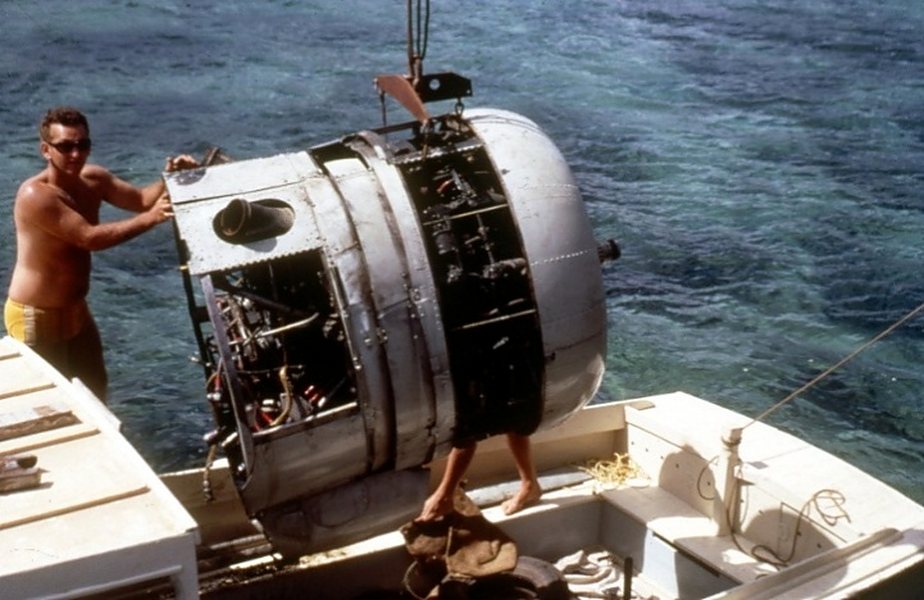
engineering “spare” for the flying boat service.
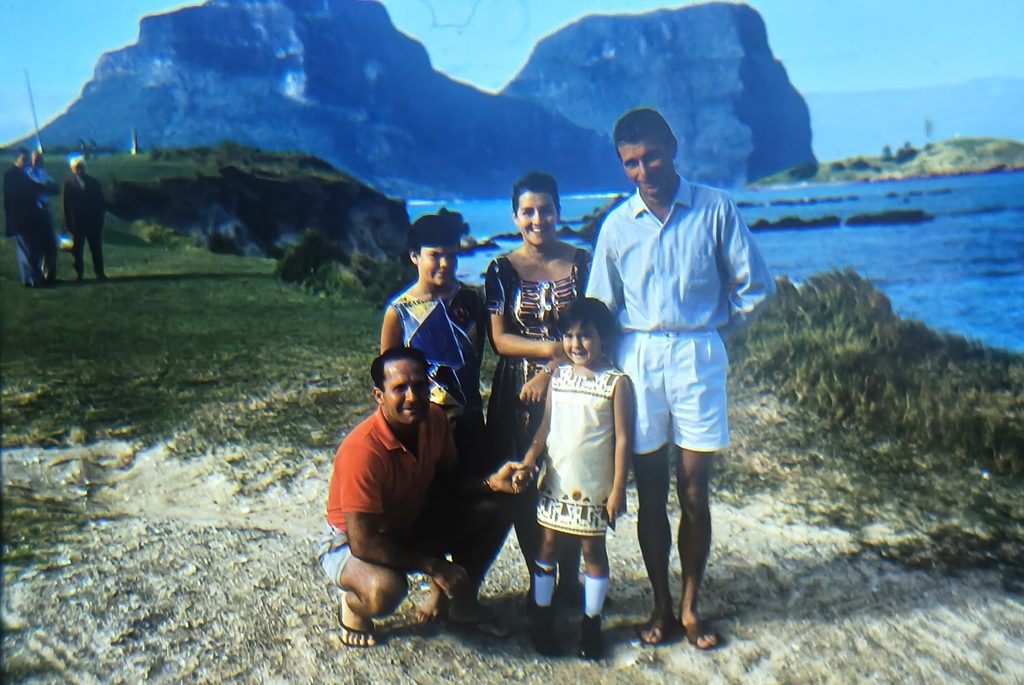
(Photo courtesy of the Chartres family)
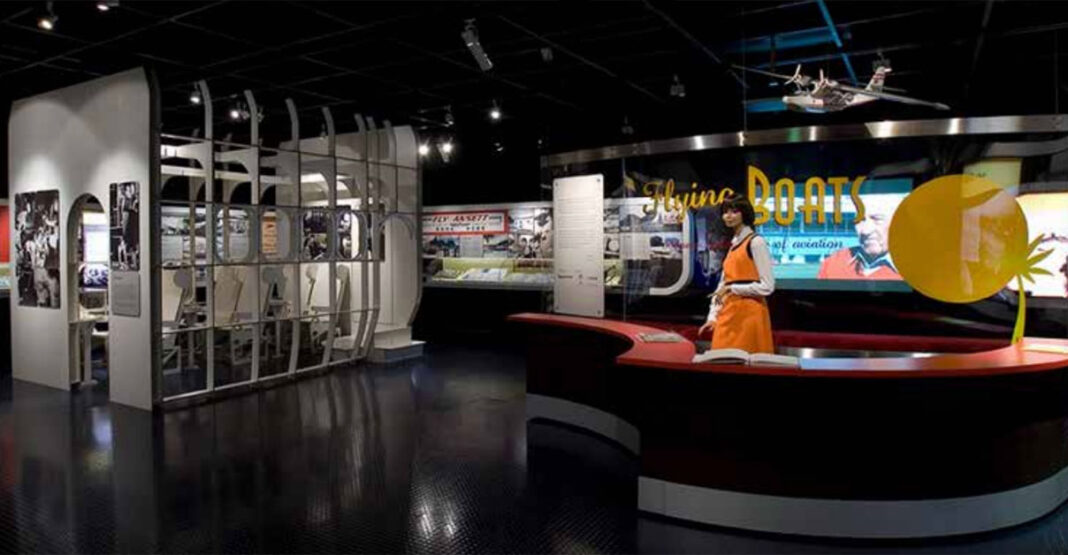
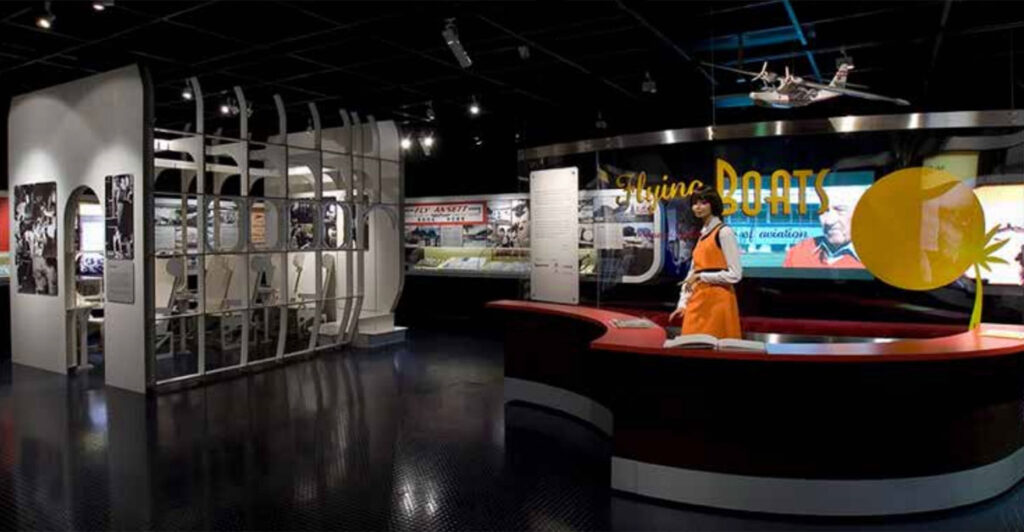
Many years later, I also came to know Noel’s son, Matthew, who in 2008, curated an amazing exhibition at the Sydney Museum titled “Flying Boats, Sydney’s Golden Age of Aviation”. I’ve personally seen some wonderful Museum exhibitions in my time (including some at the British Museum and the American Museum of Natural History), but this was as good, and probably better, than the best. Along with his wide knowledge of the subject, Matthew brought a quiet passion to his curatorial task. His combination of knowledge and personal commitment gave birth to an exhibition scheduled to run for three months, but ultimately extended for a further two months because of its popularity (How many museum exhibitions receive an encore?) It is hardly surprising, therefore, that I should ask Mathew to fill in a vital gap in Lord Howe’s “Golden Age of Aviation” and write about the contribution of the aircraft engineers, and particularly of his father, to the success of the Lord Howe flying boat service.
An Engineering Vocation – the Remarkable Story of Noel Holle and the Lord Howe Flying Boats
When Noel Holle was born in Sydney in 1924, few could have imagined that his life would become entwined with some of the most romantic aircraft ever to grace Australian skies. His career would span the golden age of flying boats, the rise of commercial aviation, and adventures stretching from Rose Bay to the Caribbean. For more than three decades, Noel lived a life defined by salt water, radial engines, and the beautiful Short Sandringham flying boat.
After finishing technical high school, Noel joined the RAAF during the Second World War. Posted to bases across Temora, Deniliquin, Tocumwal, Richmond and Melbourne, he trained as an aircraft fitter and eventually became a flight mechanic. When the war ended, he briefly worked at Philips Australia which produced valve radios and put his name down for a job with the newly proposed government airline, TAA.
However, fate intervened. Before TAA was founded, Noel spotted an advertisement for work with Qantas at Rose Bay — the home of Australia’s flying boat operations. As a young child of 12 or so, he recalled being taken to Taronga Park Zoo by his parents. Taronga has sweeping views of Sydney Harbour, and he saw a C Class flying boat beginning its long take off run toward Sydney Heads. He was so entranced by this silver bird – as he described it – that he nearly fell into the monkey pit. He applied for the job, was accepted, and in 1947 began a career that would define his life.
After World War Two, Qantas was eager to establish new routes to Pacific island nations, and ex-RAAF Catalinas were well suited for these new routes. From Rose Bay, Qantas Catalinas operated services to New Caledonia, Fiji, Port Vila, Espiritu Santo and Lord Howe Island. Converting the former RAAF aircraft into civil airliners at Rose Bay was a major engineering undertaking. The comfortable passenger seats salvaged from scrapped Qantas Empire flying boats were used to create a 15-passenger layout.
The majority of work, however, was servicing the engines on both the British Overseas Airways Corporation (BOAC) and Tasman Empire Airways Limited (TEAL) aircraft for which Qantas had the maintenance contracts. BOAC’s aircraft were the Short Hythe’s which were plying the route between Southampton and Rose Bay and the TEAL aircraft were Short Sandringham’s flying between Auckland and Rose Bay. The Southampton to Rose Bay route was essentially the old Empire Air route but with less stops due to the longer range of the Hythe’s compared to the previous C Class (Empire) ‘boats that had commenced the route in 1938.
The base at Rose Bay was a large site, almost 2 hectares and consisted of a passenger terminal and control building, the large Qantas hangar, slipway for hauling flying boats out of the water, maintenance/apron areas, Braby floating dock and another wharf plus moorings in Rose Bay and refuelling facilities.
Two years later, Qantas transferred Noel to Mascot as the airline transitioned from flying boats to land based aircraft like the Constellation and Lancastrian. BOAC had also ceased operation of their Hythe flying boats so there was less major maintenance being carried out at Rose Bay. The move didn’t suit him. Mascot lacked the magic of Rose Bay – the water, the boats, the sense of adventure. So, when another operator also based at Rose Bay, Trans Oceanic Airlines, advertised for experienced flying boat engineers, Noel jumped at the chance. After only two months away he was back at Rose Bay, working on flying boats once more.
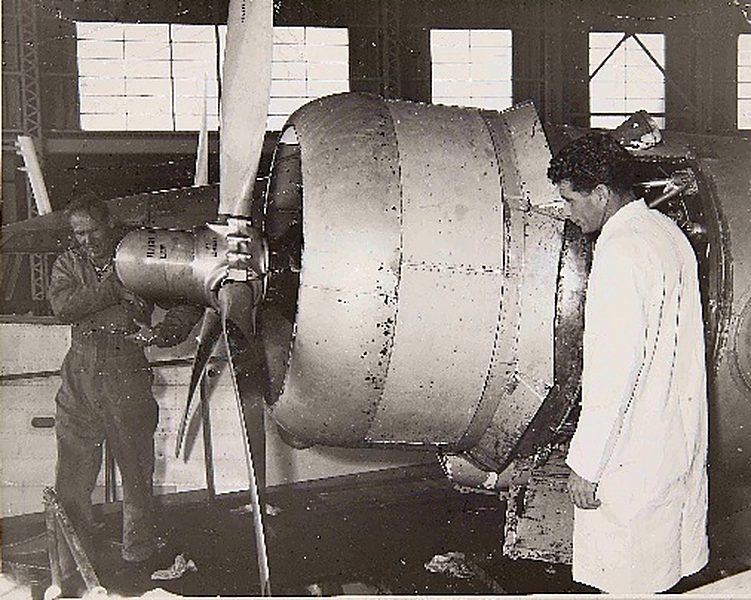
The Short Hythe’s were World War Two Sunderland’s that had been converted by Short Brothers to civilian aircraft at their factory in Hythe, UK. These aircraft were powered by the Bristol Pegasus engine. The Sandringham’s were also World War Two Sunderland’s and also converted by Short Brothers to civilian aircraft however they were powered by Pratt and Whitney Twin Wasp engines from America. While the less powerful Pegasus engines had to be overhauled after every 200 flying hours, The Pratt and Whitney Twin Wasp could rack up over 1000 flying hours before requiring an overhaul.
The Twin Wasp had been first fitted to a Sunderland during World War Two by RAAF 461 Squadron based in the U.K. when a delegation of Ministry of Aircraft Production, Coastal Command, Short Brothers and Pratt & Whitney representatives visited the squadron to discuss the project. By the time the engine conversions were made known to both the wider RAAF and RAF the evidence for their superiority was so overwhelming that it was decided it should be made official.
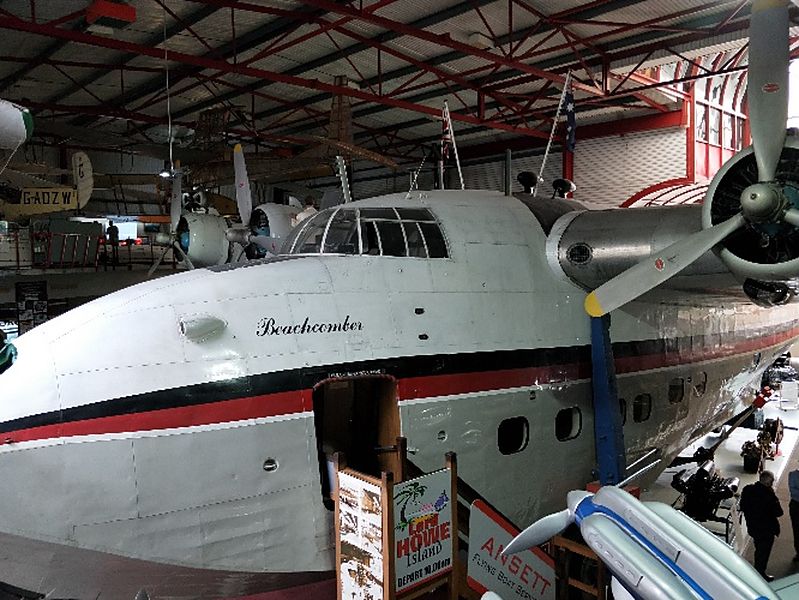
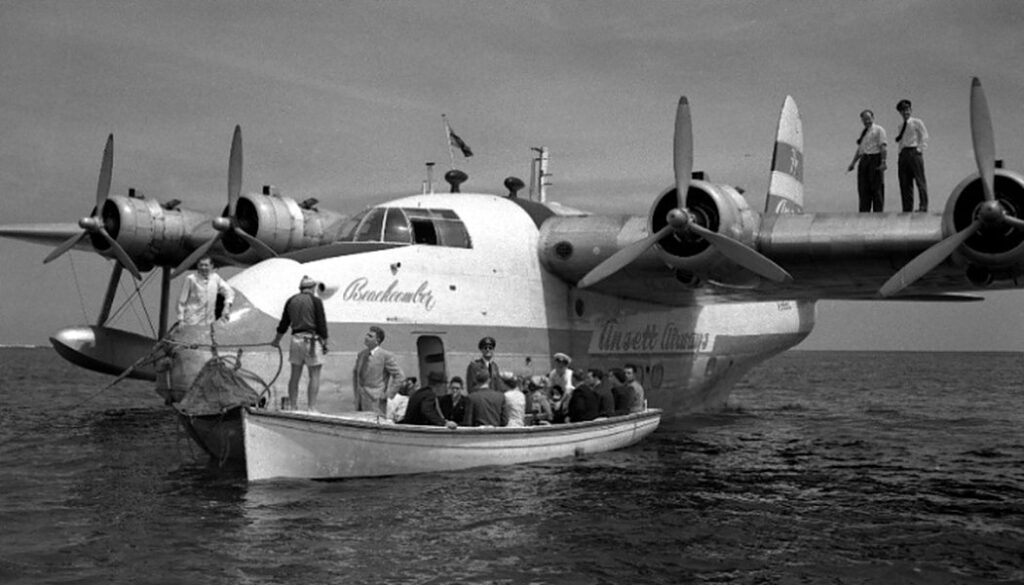
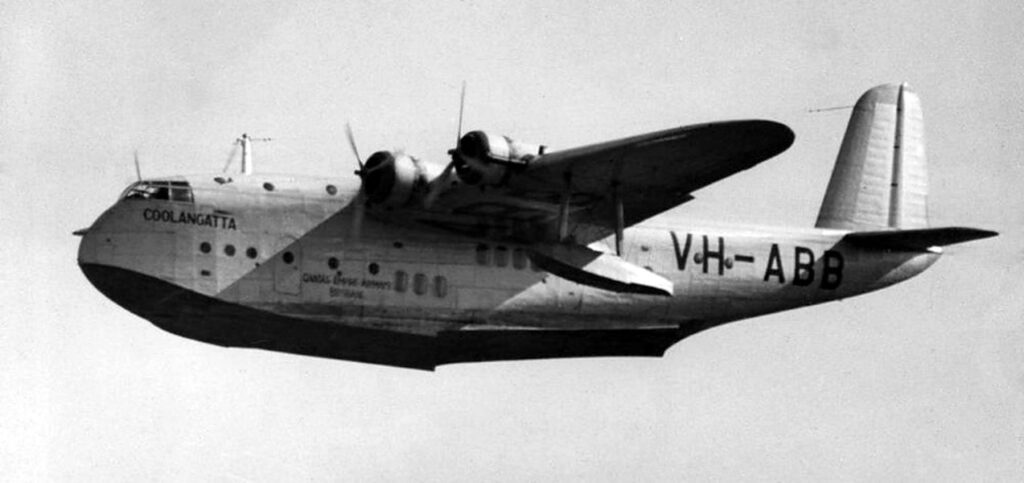
Trans Oceanic Airways flew to destinations such as Grafton, Taree, Port Macquarie, Hobart, Port Moresby and Lord Howe Island. But over its operating lifetime, rising costs and aircraft losses eventually forced a merger in 1953 with Barrier Reef Airways, forming Ansett Flying Boat Services. Noel stayed on, rising to become Chief Maintenance Inspector and occasionally serving as Flight Engineer. Ansett Flying Boat Services initial fleet included one of the former TOA Hythes and a former Barrier Reef Airways Catalina, however it soon operated using two Short Sandringham’s, VH-BRC Beachcomber and VH-BRE Pacific Chieftain.
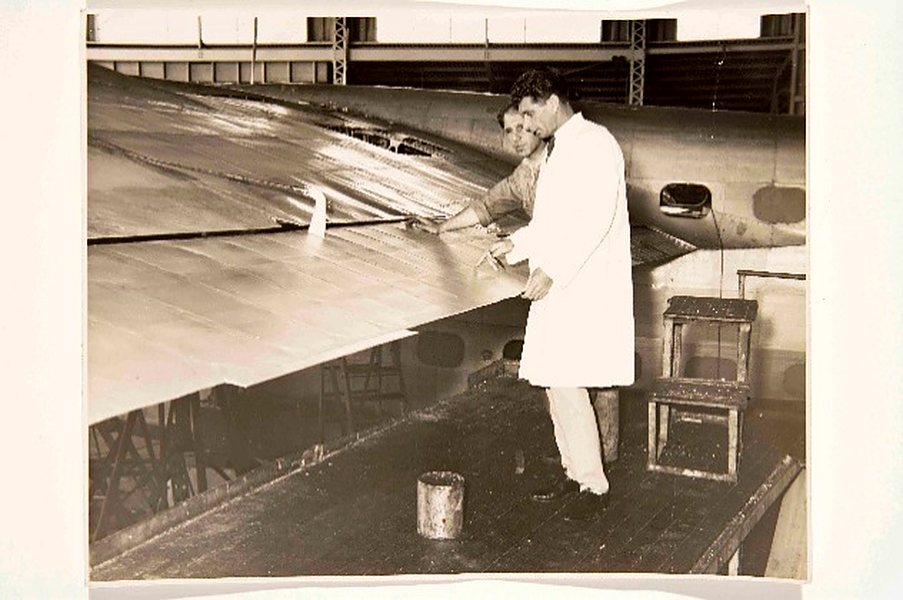
Rose Bay’s large slipway — built in 1938 for Qantas’ move from Brisbane to Sydney — allowed flying boats to be hauled out of the water for major maintenance. Salt water was unforgiving, and corrosion meant constant work. Engineers attached “beaching gear” to the aircraft, towing them up the slipway. The tyres were filled with seawater so they wouldn’t float during attachment.
The Sandringham’s wing leading edges could fold out to form a gantry or work platform, allowing mechanics to work over water. In earlier Qantas days, before the slipway existed, all maintenance was done afloat. Engineers drilled holes in their tools and tied them to their belts so that if accidentally dropped they wouldn’t vanish into the silty bottom of Rose Bay.
In July 1963, Pacific Chieftain broke its storm pennant and was blown ashore during a violent gale at Lord Howe Island. Although it lost a float, the aircraft was largely intact. A decision was made to move it off the beach and tow it back to the lagoon. It was planned to weigh down the wing supporting the intact float to keep the float-less wing out of the water.
This was a mistake. High winds shifted the weights, the aircraft rolled, and the float-less wing struck the lagoon floor, fatally damaging the fuselage.
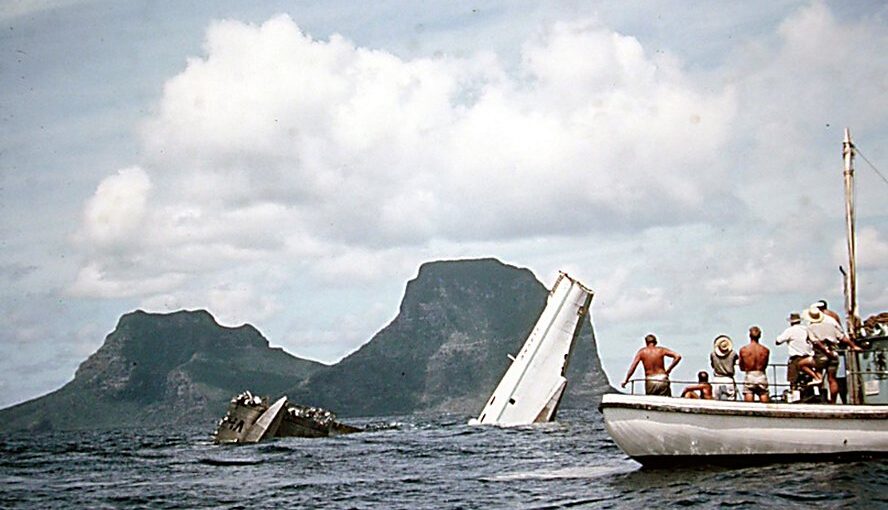
The aircraft was eventually towed out between Lord Howe Island and Balls Pyramid to be scuttled. Islanders were given brand new axes to chop holes in the fuselage. One local later recalled that he had been told he could keep his axe following the job — but on his final swing it slipped from his hands and preceded Pacific Chieftain to the bottom.
A worldwide search for a replacement aircraft was undertaken however there were no replacement Sandringham’s available. This led to the purchase of a surplus to requirements RNZAF Sunderland. It was flown to Rose Bay, stripped of its gun turrets, and refitted by a coach building crew from Melbourne (Ansett owned Ansett Pioneer Coaches). After six months of work, the aircraft emerged as VH-BRF Islander, with conventional seating rather than Beachcomber’s five cabin layout.
Engine changes on Lord Howe Island were epic undertakings. Engines were flown over as cargo, sometimes requiring parts to be borrowed from the aircraft that delivered them. Work was done in all-weather at Erscotts Hole or South Passage, where a full 360 degree swing on the mooring was possible. Eventually a spare engine was kept on the Island permanently.
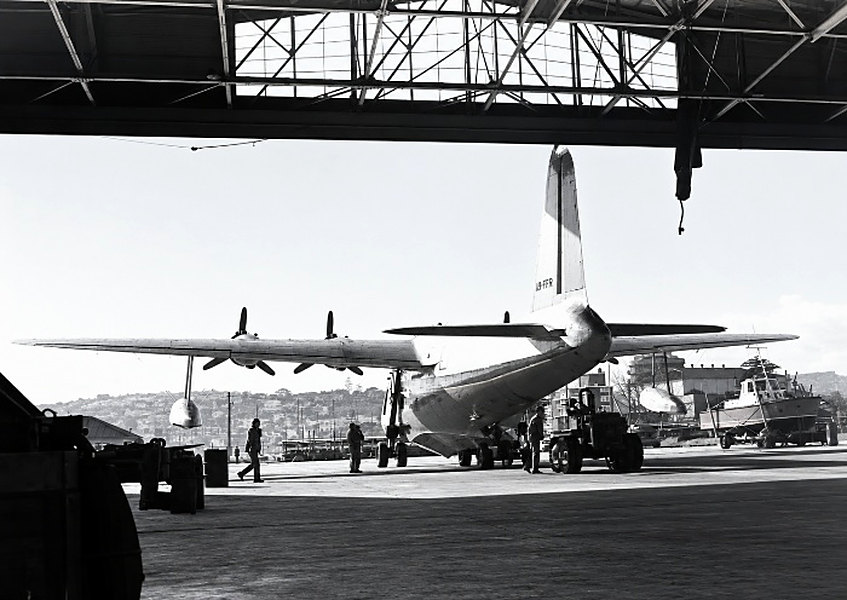
(Photo courtesy Bruce Reynolds)
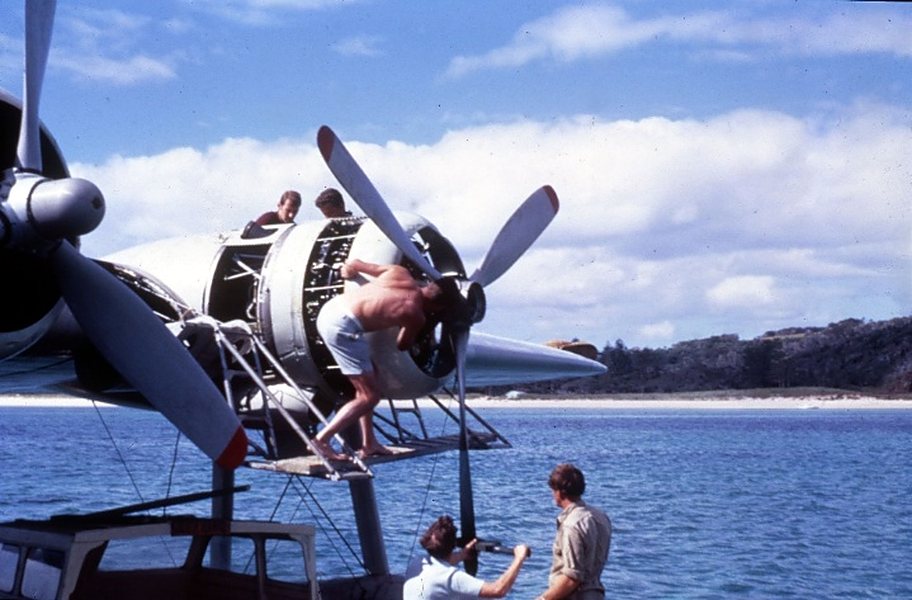
Lord Howe Island. (Photo courtesy of the Chartres family
In 1974, when Lord Howe Island’s airstrip was completed, Ansett Flying Boat Services ceased operations. The two Sandringham’s were sold to aviator Charles Blair, owner of Antilles Air Boats which was based in the U.S. Virgin Islands. With more than 25 years’ flying boat experience, Noel was offered the role of Chief Maintenance Engineer.
Both aircraft were ferried to San Juan, Puerto Rico. Noel (as one of the two Flight Engineers) was part of the crew that ferried Beachcomber (now renamed Southern Cross) along with Charles Blair and Bryan Monkton as pilots. In order to make the long journey over water journeys, the aircraft were fitted with auxiliary fuel tanks. The route took them from Rose Bay directly over Lord Howe Island, Norfolk Island and on to their first destination of Pago Pago. From there they flew to Pearl Harbour then to Long Beach in California. The final legs were a refuelling stop in Miami before their destination of Puerto Rico. Blair planned to use the ‘boats for “air cruises” among the Caribbean islands, but Islander — now renamed Excalibur VIII — faced certification challenges because its civilian conversion had been done by Ansett rather than Short Brothers.
Blair persuaded the FAA to conduct test flights in an effort to get it passed for the American register. He and Noel travelled to Washington D.C. to meet with FAA representatives and invited them to send some test pilots to St Croix in the USVI (where Antilles was based) to inspect the aircraft and carry out their own airworthiness tests. Blair piloted the take-off procedure before handing over to the test pilots when airborne. Noel watched as FAA pilots performed what he described as “acrobatic manoeuvres trying to tear the wings off.”
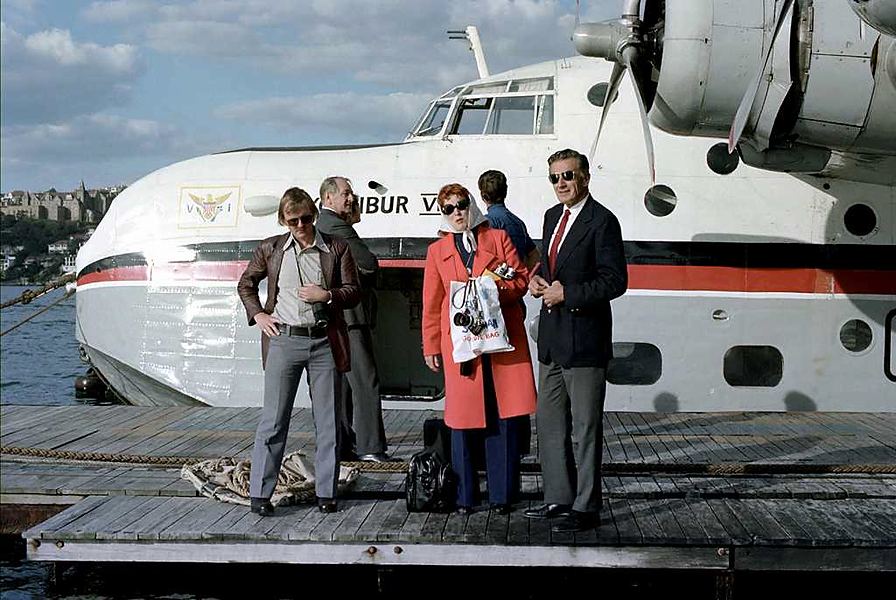
During these years, it was decided to take Southern Cross to Ireland, birthplace of Blairs’ wife, film star Maureen O’Hara. In 1976, and again in 1977 for 3 months at a time, Southern Cross flew charter flights for classic aviation enthusiasts. The flight to Ireland left St Croix and flew to Boston where it overnighted and refuelled.
The following day it flew to Gander Lake in Newfoundland, Canada, to again refuel and overnight. Blair had flown in and out of Gander Lake many times previously as a flying boat pilot so was able to draw on old acquaintances for services. The Sandringham then crossed the Atlantic, flying at low level, to Foynes, Ireland, another destination with which Blair was intimately familiar.
The journey was repeated in reverse for the return and, the following year, New York Harbour was substituted for Boston Harbour. As there were no auxiliary fuel tanks fitted for these journeys, Blair eschewed the use of the passenger heating system in order to save fuel. The journeys across the Atlantic were very cold affairs.
In 1979, Charles Blair was tragically killed while piloting a Grumman Goose. Shortly after Noel was struck down by numerous health issues and returned to Australia where he and his family settled in Port Macquarie. Following several changes of ownership, Beachcomber/Southern Cross now resides in Southampton U.K. and Islander/ Excalibur VIII is in Florida, both as a static museum exhibits.
Noel Holle died in Port Macquarie in 1993. He had visited Lord Howe Island a few more times — this time in an Oxley Airlines Piper, not one of his beloved flying boats. But his legacy remains woven into the history of Rose Bay, Ansett Flying Boat Services, and the golden era of aviation that unfolded on the waters of Sydney Harbour and beyond.