
Ian Hutton, Curator LHI Museum
In the 2nd week of October, Marco Nero visited Lord Howe and brought some remarkable memorabilia to donate to the museum. He first came in 1967, as a three-year-old with his parents, and has returned nine times between then and now.
We will share more information about the donated items in future Signals but, for now, these are the stories of two coins he has donated.
Two Discovery Stories
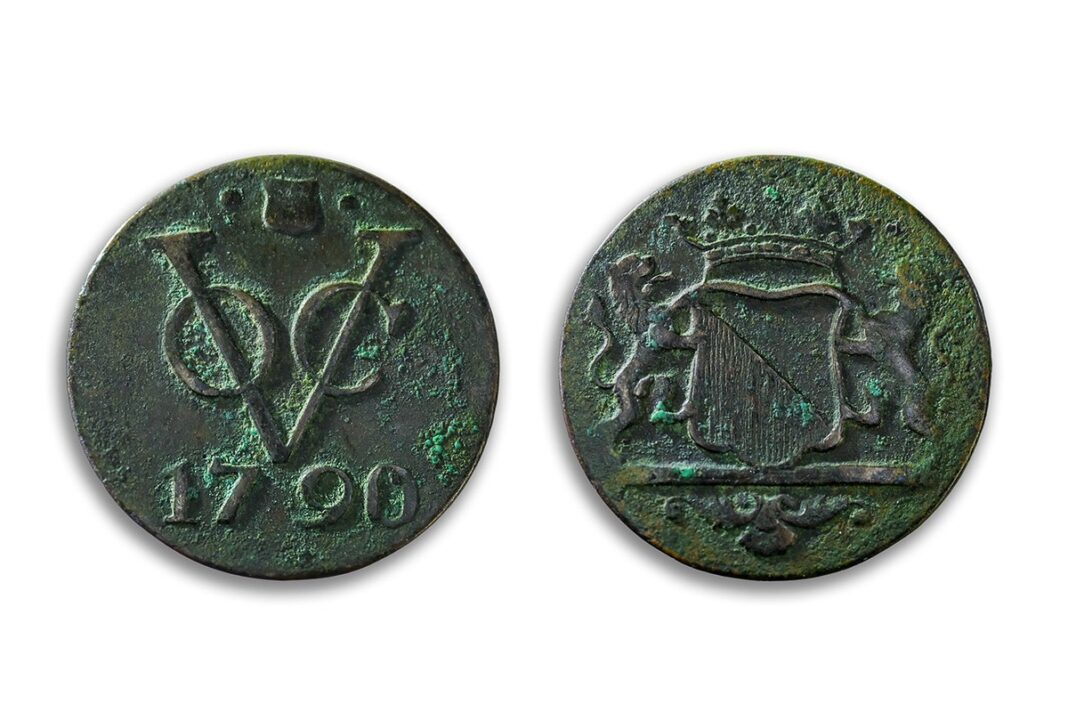
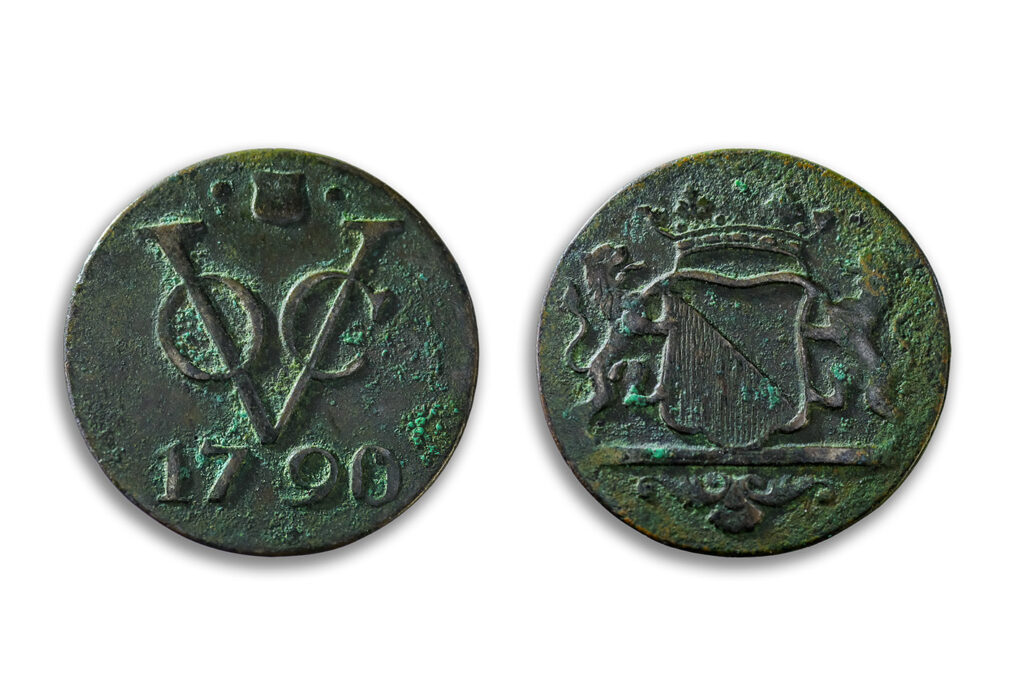
1. A Dutch East India Company 1 Duit
Issuing Authority: Dutch East India Company (VOC) / Zeeland (Middelburg Mint)
Mintage Year: 1790 (Authentic lifetime issue)
In 1972, at six years of age, Marco Nero was investigating the soil under the entrance of Trader Nick’s shop (where Arajilla reception stands) while his father was inside. He was eating a recently purchased ice cream but hoping to find any Australian coins that might have been dropped outside the shop – enough to buy yet another ice cream! Instead, he uncovered a copper VOC coin just a few centimeters below the surface.
Because it was non-spendable currency at the time, it was retained as a “keep-sake”. The soil in which the coin was found was protected by Trader Nick’s floorboards and wooden steps and had probably remained undisturbed for many decades. Presumably, the coin was dropped by a 19th-Century sailor, or an early resident, intent on bartering supplies.
The Old Settlement site, as the name suggests, was the location of the earliest permanent settlement on Lord Howe, occupied by a lone beachcomber, Edward Tirrel, in February, 1834. Tirrel was followed 11 months later by the families of George Ashdown, James Bishop and John Chaplin, emigres from New Zealand. In February, 2024, a very early clay pipe was discovered in the beach sand below Trader Nicks by another visitor to the Island, Linda Drake.
Regarding the coin, Marco Nero said:
“While this coin has immense sentimental value as a childhood memory of Lord Howe Island, it belongs back on the Island where it was found to serve as a tangible example of our early maritime and whaling history.”
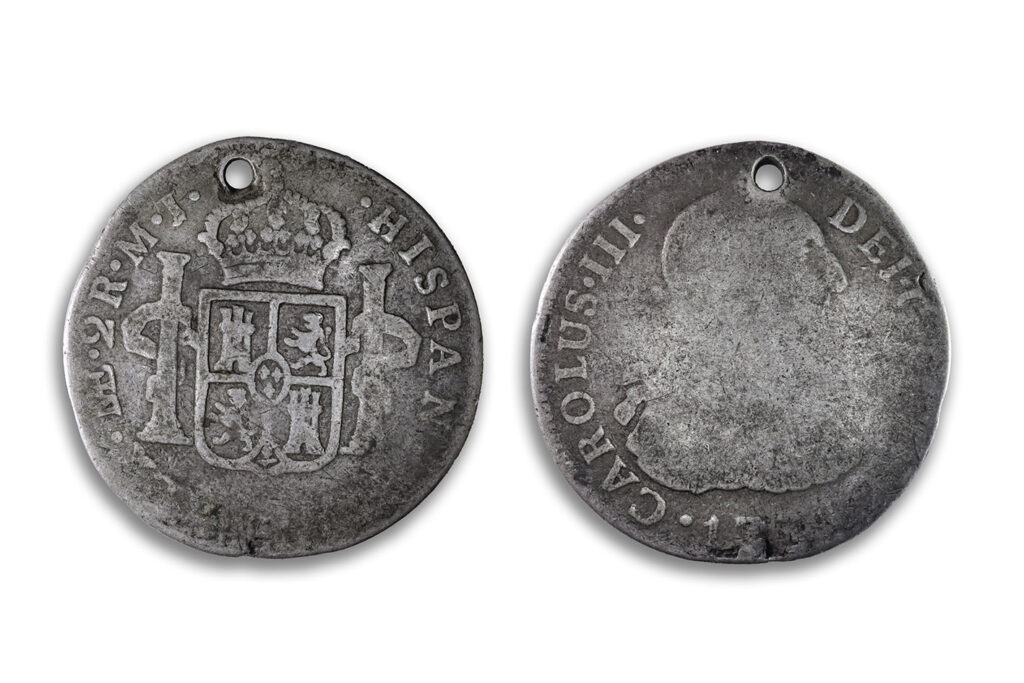
2. Spanish Colonial 2 Reales Silver Coin (Dos reales – Two bits)
Issuing Authority: King Charles III / Kingdom of Spain (Lima, Peru Mint)
Mintage Year: 1772-1780 (Exact year worn flat; reads 17–)
Mint: Lima Mint, Peru (denoted by the Lima monogram)
Assayers: Manuel Iglesia Abarca and Jose Rodriguez Carasa (M·J)
Discovery
This silver coin was discovered in 1979 by Marco Nero at Goathouse Cave lookout, a massive natural rock overhang situated roughly 420 meters above sea level.
It was recovered underneath a dry ledge within the basalt cliffs, uniquely protected from the Island’s corrosive marine elements for nearly two centuries. Because the lookout provides an unparalleled vista over the Island’s expansive natural lagoon, it historically served as a high-altitude lookout for visiting sailors or stranded shore parties keeping watch on the horizon.
This specimen features unique historical modifications: it was intentionally holed at the 12 o’clock position so it could hang vertically; and its outer edge had been polished smooth. These features strongly align with 18th- and 19th-century maritime folklore, indicating the coin was worn close to the skin. It might have been a sailor’s protective talisman against drowning or shark attack or maybe kept as a form of portable “burial insurance” to guarantee a proper burial in a foreign port.
Additionally, this denomination holds prominent regional significance as Australian “Proclamation Currency.” In 1800, to combat severe currency shortages, Governor Philip Gidley King declared the Spanish 2 Reales coin legal tender across early colonial New South Wales, valuing it at 2 Shillings.
Marco Nero said:
“While this piece holds immense personal value as a relic of my exploration of Mt. Lidgbird, its extraordinary connection to early Pacific maritime lore and Australia’s Proclamation era belongs back on Lord Howe Island where it was protected by the cavern for nearly two centuries.”